


苏州市阳澄湖大闸蟹行业协会-官方网站
秘书处:0512—62586298
办公室:0512—67325419
新闻办:0512—66106648
投诉:0512—62586598
(周一至周五
上午9:00—11:30,
下午13:00—16:30)
传真:0512-67325419
地址:苏州市相城区阳澄湖镇相石路1-1号楼
CATCH OF THE SEASON TURNED INTO A CULINARY RITUAL Suzhou's fresh and flavorful hairy crab delicacies savored with eight small tools and a dollop of patience
| 作者:暂无 来源:中国日报 【大 中 小】 【打印】发表时间:2026/10/24 浏览:128 |
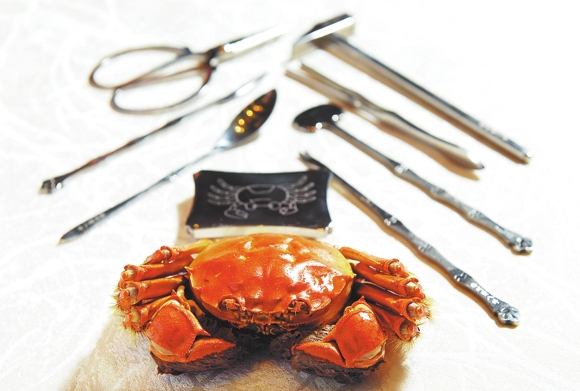
A hairy crab and a set of eight crab tools, also called xiebajian, which consists of a hammer, an anvil, a pair of tongs, a spatula, a spoon, a pair of scissors, a scraper and a pick.
A gentle tap cracks the shell of a steaming hairy crab. A small spoon helps lift its rich golden roe, while a slender pick helps draw a tender strand of meat from deep inside one of its legs. Beside the plate sits a set of eight small utensils — each designed to help diners reach a different part of the crab.
Autumn is the prime season for enjoying hairy crab in China, as the crustaceans mature and their meat and roe become richer. In Suzhou, Jiangsu province, the Yangcheng Lake hairy crab is a seasonal favorite, prized for its sweet meat and plump roe.
Yao Shuisheng, a spokesman for the Suzhou Yangcheng Lake Hairy Crab Association, describes the flavor as fresh and fragrant. "The best time to enjoy the hairy crab is from late October through late November," he said.
Autumn also brings into focus some local traditions surrounding this crab species, from selecting the best catch to using a set of eight specialized utensils known as xiebajian.
Located north of Suzhou, Yangcheng Lake is one of China's best-known sources of freshwater hairy crab. Its relatively shallow waters and abundant aquatic vegetation provide favorable conditions for crab cultivation. The crustaceans are quickly recognized by their greenish-blue backs, pale bellies, golden hair and golden claws.
Yao attributes their distinctive flavor partly to the lake's environment, as its water is clear and slightly alkaline, with an abundance of aquatic plants and a relatively firm lake bed.
Maintaining the lake's ecological balance has been a challenge. From the mid-1990s to around 2010, intensive net-pen aquaculture put pressure on the water quality. Subsequent reductions in net-pen areas, pollution control measures and improvements made to surrounding ponds formed part of broader efforts to protect the lake.
Cooking methods have evolved. "Previously, we would put the crabs directly into a pot of water and boil them. Nowadays, steaming them is generally recommended, as this keeps the meat firm, preserves the aroma and allows diners to appreciate the natural sweetness of the lake," Yao said.
Boiled crab remains an option, while spicy crab and batter-coated pan-fried crab are also common in Suzhou cuisine.
A user on Xiaohongshu, also known as RedNote, who visited a restaurant on Lianhua Island at Yangcheng Lake, praised stir-fried crab with rice cakes and crab roe noodles on the menu for bringing out the sweet, savory flavor.
The pleasure is heightened once the cooked crab reaches the table. According to the Yangcheng Lake Hairy Crab Industry Research Institute, the tradition of using xiebajian for a meal can be traced to the Ming Dynasty (1368-1644), with the use of these "eight crab tools" later flourishing in Jiangnan, the region south of the Yangtze River.
The set typically consists of a hammer, an anvil, a pair of tongs, a spatula, a spoon, a fork or a pair of scissors, a scraper and a pick. Together, the tools allow diners to crack the shell, lift the roe and retrieve meat from narrow joints and legs. The hammer breaks the shell against the anvil, the spatula loosens the body, and the slender pick gains access to places where fingers cannot reach.
The entire process turns eating into an exciting culinary ritual. The method may seem elaborate at first, but its purpose is simple: to make the most of a meal without rushing the experience.
Diners can enjoy the crab meat and roe with ginger vinegar, sometimes accompanied by warm rice wine — a traditional seasonal pairing. As autumn deepens around Yangcheng Lake, the custom endures — a steaming crab, eight small tools and the patience to savor each bite.
liyingxue@chinadaily.com.cn
|
前一篇:阳澄湖变奏曲:从“养殖湖”“生态湖”到“创新湖区”的变迁让城市重识“湖区经济”
后一篇:2026年9月28日,苏州阳澄湖大闸蟹正式开捕。
|

